
Rope Access & Work at Height
At Bison Up – High Access Specialist, we are fully certified to operate all conventional access equipment for work at height, including scissor lifts, boom lifts, fixed scaffolding, suspended scaffolding, among others. We are also certified in rope access techniques, which sets us apart from empirical practices and ensures safe, standardized procedures.
As certified technicians, we are prepared to work safely and efficiently in areas where traditional methods cannot reach or are not viable. Every task is executed using the proper equipment, applying technical criteria, and strictly adhering to all safety regulations related to work at height and rope access.
We are certified in high-angle rescue, allowing us to perform self-rescue maneuvers or assist a teammate quickly and safely in the event of an emergency. This combination of certification, technical expertise, and real-world experience enables us to handle any work at height or complex access job safely and professionally.
Free On-Site Assessment & Quote
What Is Rope Access?
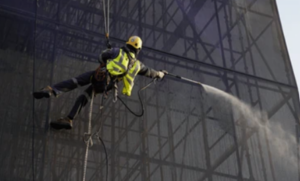 Rope access is a specialized method of working at height that uses advanced climbing, positioning, and progression techniques to reach difficult or restricted areas without relying on bulky structures such as scaffolding, swing stages, or powered access equipment like scissor lifts, boom lifts, vertical mast lifts, etc. Originating from mountaineering and caving, the system has been refined to meet the highest industrial standards and is extremely reliable when performed by technicians trained and certified under the official regulations that govern the discipline.
 Unlike these traditional systems, rope access is fast, discreet, and non-invasive, avoiding ground-level closures where scaffolding, suspended platforms, or aerial lifts often require blocking off entire areas, redirecting foot traffic, or even shutting down traffic lanes. And because it requires no fuel and produces virtually no noise, rope access minimizes environmental impact and allows work to be performed with a very low acoustic footprint, keeping the surrounding area clean and quiet.
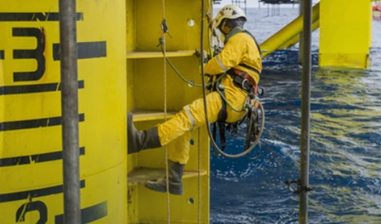 The system also removes the access limitations common to other methods, allowing technicians to reach heights and positions that conventional equipment simply cannot access, offering unmatched versatility in complex environments.
Additionally, by eliminating heavy machinery and complex setup procedures —whose relocation demands significant time and procedural steps, as is the case with suspended platforms— rope installation and repositioning can be completed within minutes, enabling work to start or resume with far greater speed. For this reason, rope access reduces overall project execution times by approximately 60% to 85%, depending on the structure and the scope of the job. This results in fewer interruptions, higher efficiency, and a more effective use of time and resources.
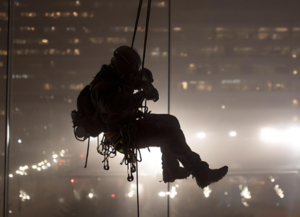 Because of its portability, adaptability, and the high level of technical training required, rope access has become one of the most effective, safe, and competitive solutions for inspections, maintenance, cleaning, installations, painting, etc. In addition, rope access techniques are a critical component in modern industrial rescue operations, thanks to their precision, control, and ability to reach locations under challenging or high-risk conditions.
And this is why, throughout the industry, many professionals confidently say that Rope Access is the Answer.
Why and how Is Rope Access So Safe?
In rope access, safety is built on two fundamental pillars:
equipment strength and system redundancy.
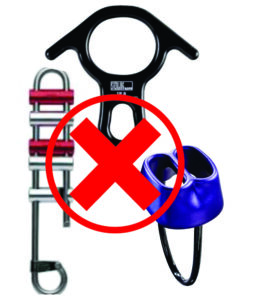 Every component used is designed and manufactured specifically for industrial rope access, complying with strict standards. These are not improvised or recreational devices—everything is industrial-grade, certified, and engineered to withstand the loads and demands of work at height.
A rope access technician always works on two independent ropes, each with a minimum strength appropriate for the activity (for example: certified static ropes rated above 22 kN). These ropes are:
- Working line
- Safety line (backup line)
 Each rope is installed on two independent anchor points, each with a minimum strength of 5,000 pounds, which is the required minimum under work-at-height regulations. In practice, although the technician needs only 5,000 pounds per rope, each line is backed by two anchors, giving each rope a total of 10,000 pounds of capacity. In the unlikely event that one of those anchors fails, the second anchor alone has more than enough strength to continue supporting the technician, maintaining complete system integrity.
The ropes are secured to their anchors using standardized rope-access knots, connected with double- or triple-locking carabiners, preventing accidental opening and ensuring a fully secure connection. This keeps each rope firmly and safely attached to its anchors.
The technician connects to the working line through a hands-free descent device, which remains locked by default. Regulations require the exclusive use of auto-locking descenders, ensuring that if the user lets go of the device for any reason, it immediately locks and stops the descent. To continue descending, the technician must intentionally operate the handle, guaranteeing full control of the maneuver and eliminating the possibility of free-fall due to hand release.
 This device is attached to the ventral attachment point of the harness—a five-ring harness designed specifically for industrial rope access and rescue.
At the same time, the technician is connected to the safety line through an automatic backup device (specialized rope grab), which locks instantly if the working line fails. In that scenario, the technician is safely supported by the emergency rope, which is also installed on two independent 5,000-lb anchor points, providing a total of 10,000 pounds of capacity, more than enough to maintain full stability and protection.
In summary:
each rope is anchored to two independent points, and the technician is connected to both ropes through the harness, creating a redundant, secure system that reduces the possibility of a total failure to nearly zero.
What Happens in an Emergency?
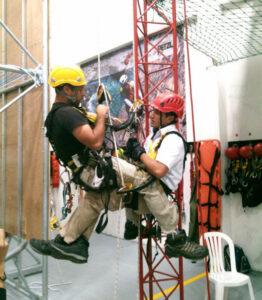 With complete and proper training, every certified rope access technician masters more than twenty mandatory rescue techniques, allowing them to resolve any issue that may affect their own system, as well as safely assist or evacuate a coworker who needs help at height. In addition, every technician carries a minimum set of mandatory equipment, not only to work safely while suspended, but also to perform self-rescue maneuvers or assisted rescues whenever necessary. This level of preparation ensures that emergency response is immediate, efficient, and entirely independent from external equipment or machinery operators.
Rope access teams are trained not only to prevent incidents, but also to manage and resolve any emergency directly while on the ropes. Unlike mechanical platforms—where a malfunction can leave a worker trapped waiting for specialized personnel—rope access technicians maintain full mobility and the ability to act without delay.
System redundancy plays a crucial role: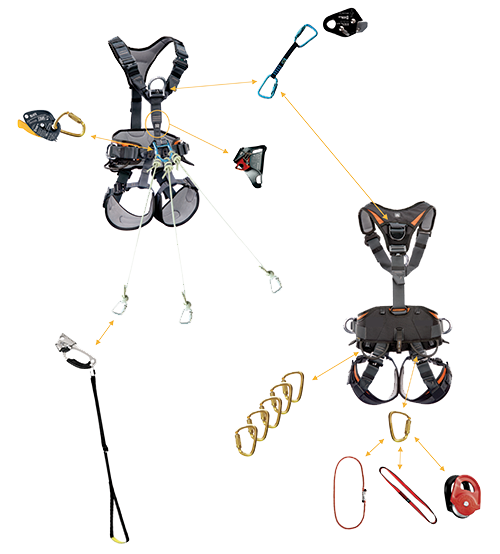
- The technician is always connected to two independent ropes.
- Each rope is anchored to two separate anchor points, providing high support capacity.
- Auto-locking devices ensure that even if the technician lets go, no fall occurs.
- Backup devices activate instantly if the working line fails.
- A second technician can always reach the affected worker through their own rope system.
Additionally, all tools used in rope access are secured with certified tethering systems, designed to withstand their own weight and forces. This prevents any dropped object from reaching the lower level and causing an accident, further reinforcing the overall safety of the operation.
In rope access, the rescue plan is not an external protocol:
the team itself is the rescue plan.
This makes emergency response in rope access faster, safer, and far more reliable than in conventional height-access systems.
We have the capability to perform any type of work at height. Here are some examples of our most requested services:
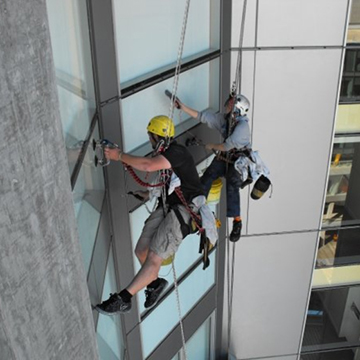
Advanced Window Cleaning Service
Specialized high-rise window cleaning using certified rope access techniques.
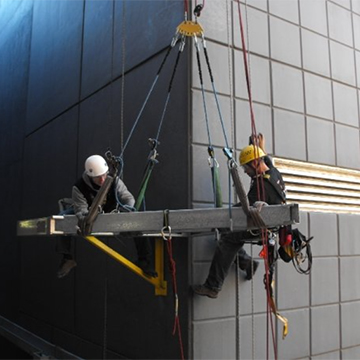
Installations at Height
Installation of panels, accessories, signage, and exterior elements on elevated structures.

Caulking and Sealant Application
Professional silicone application on windows and joints to correct leaks and prevent water infiltration.

High-Pressure Water Testing
Leak detection and waterproofing verification using controlled high-pressure spray testing.
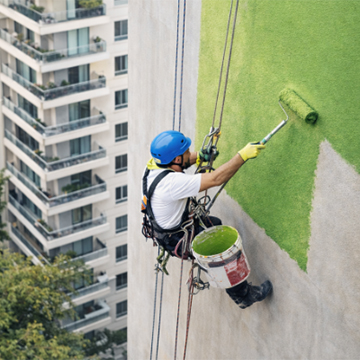
Painting and Protective Coatings
Application of paint and protective coatings on façades, structures, and hard-to-reach areas.

Tree Trimming at Height
Technical pruning, removal of hazardous branches, and vegetation management using rope access.
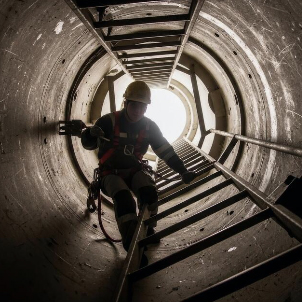
Difficult-Access Operations
Execution of tasks in areas unreachable by machinery, using certified rope access systems.